TL;DR: Busy households can compost with less mess by separating food scraps at the point of use, keeping a steady supply of dry carbon-rich material, adding only accepted inputs, and choosing a system that matches available space and local collection options. Consistency matters more than tending a pile every day.
Composting does not need to become another demanding household hobby. The easiest low-waste routine is the one that fits how food is prepared, where scraps can be stored, and whether the household uses a backyard pile, worm bin, municipal cart, or community drop-off.
Choose the Simplest System You Will Actually Use
A backyard bin works well where there is outdoor space and access to both food scraps and dry yard material. A tumbler can keep the process contained, although capacity is limited. Vermicomposting can work in smaller spaces when managed correctly. In communities with organics collection, a kitchen container plus a municipal cart may require the least home maintenance.
The U.S. EPA home-composting guide outlines backyard and worm-composting options and also recommends checking local programs when home composting is not practical. That distinction matters because accepted materials differ between home piles and commercial facilities.
Put the Scrap Container Where Waste Is Created
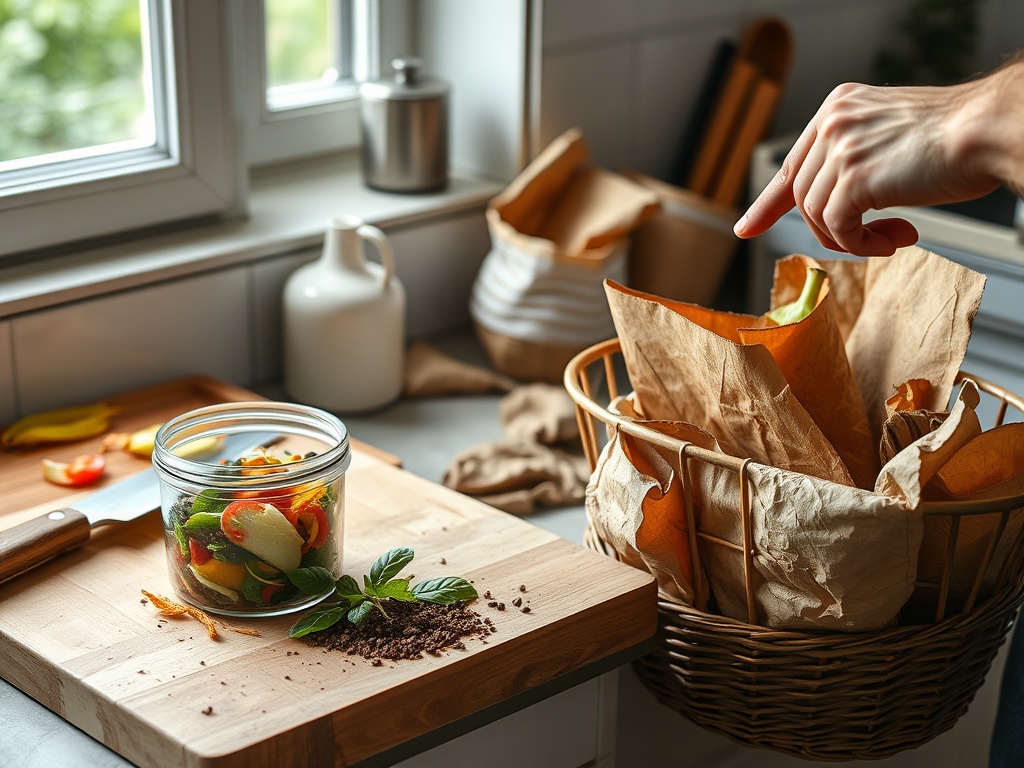
If the container is inconvenient, usable scraps tend to end up in the trash. Keep a small lidded pail near the cutting board or food-prep area. Empty it often enough to prevent odor and fruit-fly problems. Households that cook less frequently may prefer storing scraps in the refrigerator or freezer until collection day or until there is enough material to take outdoors.
Use a container that is easy to wash and comfortable to carry. Fancy countertop equipment is optional. The habit matters more than the accessory.
Keep Dry Browns Ready Before You Need Them
Backyard composting becomes difficult when a household has plenty of wet food scraps but no dry carbon-rich material. Save dry leaves, shredded plain cardboard, small twigs, or other locally appropriate “browns” in a covered container or bag near the compost area.
EPA guidance explains that composting depends on a balance of carbon-rich browns, nitrogen-rich greens, moisture, and oxygen. Keeping browns on hand makes it easier to cover fresh food scraps, absorb excess moisture, and correct odors without a special trip to buy material.
Learn the Short List of Inputs That Cause Problems
Fruit and vegetable scraps, coffee grounds, many yard trimmings, dry leaves, and suitable paper products are common home-compost inputs. Meat, fish, bones, dairy, fats, oils, pet waste, treated wood, and some diseased or herbicide-treated plant material may be inappropriate for a typical backyard pile.
Commercial composting programs may accept items that backyard systems should not. Follow the collection program’s rules rather than relying on packaging claims such as “compostable.” A product that breaks down in an industrial facility may not behave the same way in a cool backyard bin.
Use a Cover-and-Go Routine for Food Scraps
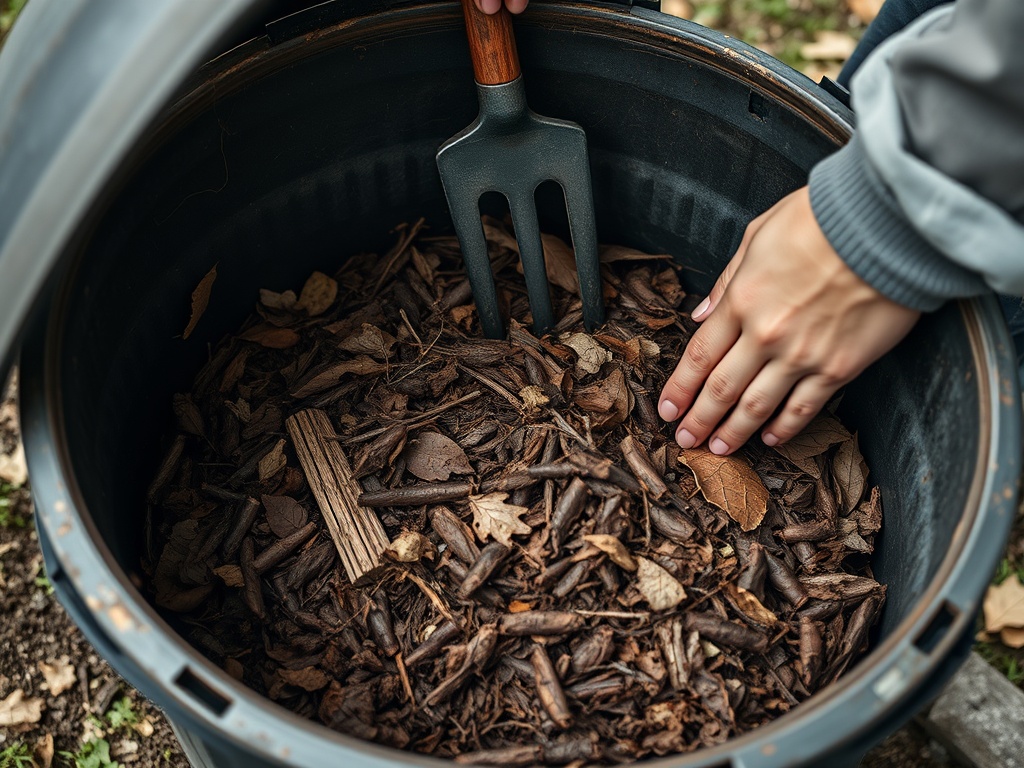
A practical low-effort habit is to add a small amount of food scraps, then cover them with a thicker layer of dry browns. This reduces exposed food, helps control moisture, and can discourage pests. Chop very large or tough pieces only when convenient; smaller pieces generally decompose faster, but the system should not require perfect knife work after every meal.
If the pile becomes wet and smelly, add more dry browns and increase aeration. If it is very dry and inactive, add moisture gradually. The goal is a damp environment with enough pore space for air, not a waterlogged mass.
Turn Less Often but Turn With a Purpose
Frequent turning can speed decomposition, but busy households do not need to treat compost like a daily task. Turn when the pile becomes compacted, develops odor, needs moisture redistributed, or when you want faster breakdown. A passive pile can still decompose; it simply takes longer.
This is where expectations matter. “Low waste” does not have to mean “fastest possible compost.” A slower system that the household maintains consistently may be more successful than an intensive system abandoned after a month.
Design the Bin Around Pest Prevention
Keep food scraps buried or covered, maintain an appropriate mix of browns and greens, and use a secure lid where rodents are a concern. EPA guidance recommends avoiding large openings in bins when pest exclusion is important. Do not place meat, dairy, grease, or other attractive materials in a backyard pile unless a reliable local method specifically supports them.
Clean up spills around the bin and avoid leaving a trail of scraps between the kitchen and yard. If pests become persistent, pause food additions while you correct the structure or switch to a more secure system.
Reduce Waste Before It Reaches the Compost Bin
Composting is useful, but preventing edible food waste comes first. Plan meals around what is already in the refrigerator, freeze ingredients before they spoil, use vegetable trimmings for stock where appropriate, and serve smaller portions when leftovers routinely go uneaten.
The compost bin should capture unavoidable organic scraps, not become permission to overbuy food. This keeps the household’s waste-reduction effort focused on the highest-value behavior: using food as food whenever practical.
Connect Composting to the Garden Without Overapplying It
Finished compost can support soil organic matter and plant growth, but it is not a universal fertilizer replacement. Apply it based on the bed, crop, and soil condition. Too much compost can contribute excess nutrients or salts, especially when the source material is nutrient-rich.
For clay-heavy beds, review how to fix clay soil without overworking it before incorporating material repeatedly. For moisture management, the best time of day to water plants in summer can help you avoid treating compost-amended soil as if it always needs the same irrigation schedule.
A Quick Household Compost Reset
At regular intervals, empty the kitchen container, rinse it, cover the newest scraps with browns, check moisture, and look for odor or pests. Add a quick turn only when needed. Refill the kitchen station and the brown-material supply before they run out.
That small reset prevents most problems from becoming unpleasant chores. It also makes it easier for multiple household members to participate because the system stays predictable.
Make Convenience the Sustainability Strategy
The best low-waste composting habit is not the most elaborate one. It is the system that keeps acceptable organics out of the trash without creating odor, pests, confusion, or unnecessary household labor. Start with one collection container, one clear list of accepted materials, and one reliable destination for the scraps.
If the routine becomes messy, simplify it rather than abandoning it. A smaller bin emptied more often, frozen scraps, a municipal cart, or a steady stock of dry leaves may solve more problems than adding new equipment.
Home and garden information is educational only. Compost rules, wildlife concerns, municipal collection requirements, and acceptable materials vary by location. Follow local organics-program guidance and avoid applying unfinished or unsuitable compost where food safety, plant health, or environmental conditions are uncertain.