
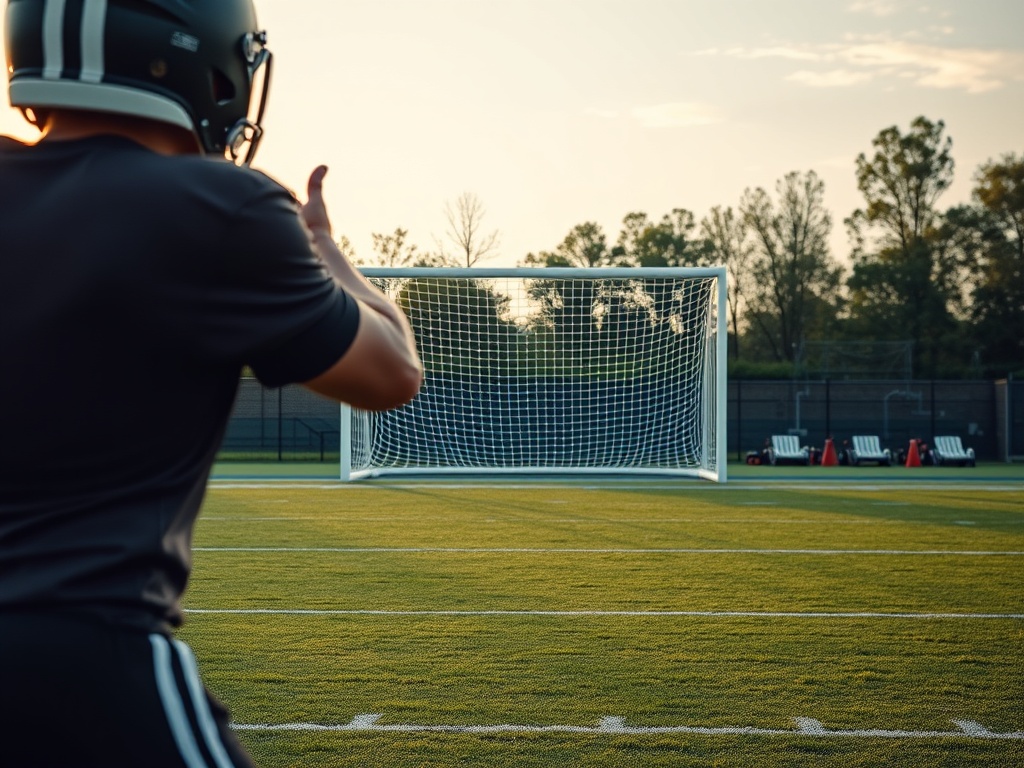
Throwing accuracy improves when the athlete controls foot alignment, timing, release path, and target feedback instead of only trying to throw harder.
TL;DR: Accuracy is a repeatable sequence: set the base, rotate under control, release on line, then review the miss.
- Football, baseball, and ultimate use different grips and trajectories, but they share balance and target discipline.
- Short, measurable practice beats random long throwing sessions.
Accuracy starts before the arm moves
Most inaccurate throws are not purely arm problems. The throw is often decided by the feet, hips, shoulders, and eyes before the ball or disc leaves the hand. In football, an off-platform throw may be necessary under pressure, but basic accuracy still starts with a stable base. In baseball, the stride and front side help the arm arrive on time. In ultimate, the pivot foot and wrist angle shape the disc path. For deeper context, see CDC HEADS UP return-to-sports guidance.
Treat accuracy as a chain. If one link is rushed, the athlete may compensate with the wrist, elbow, or shoulder. That compensation can create inconsistent misses and extra stress. A better goal is a repeatable setup that lets the athlete throw the same line at different speeds.
The four-part throwing sequence
Use a simple sequence: aim, align, transfer, release. Aim means picking a small target, not a general area. Align means setting the lead side toward that target. Transfer means moving energy from the ground through the hips and trunk. Release means finishing through the line rather than across the body. This works for a quarterback hitting a receiver, an infielder throwing to first, or an ultimate player hitting a cutter in stride. For deeper context, see how to recover faster between games, practices, and tournaments.
The sequence should be practiced at reduced speed first. Many athletes only rehearse full-speed throws, so they never feel which part is breaking down. Slow practice exposes whether the miss is caused by late footwork, drifting posture, a closed shoulder, or a rushed release. For deeper context, see how to stay composed in close games and high-leverage moments.
A drill ladder for cleaner misses
Start with ten stationary throws at a close target. The goal is not power; it is identical rhythm. Move to step-behind throws, then moving throws, then decision throws where the target changes late. For football, use numbers on a receiver or a net target. For baseball, use chest-height targets and vary distance. For ultimate, use backhand and forehand targets at different release heights.
Track misses in four categories: high, low, left, and right. Patterns matter more than one bad throw. A repeated high miss often points to late release or rising posture. A repeated pull across the body may suggest poor alignment. This type of feedback helps athletes adjust without guessing.
Sport-specific adjustments that matter
Football accuracy must account for grip, laces, pocket movement, and receiver timing. Baseball accuracy often depends on footwork into the throw and a clean exchange. Ultimate accuracy adds wind, disc angle, and release variety. In all three, the athlete needs a target routine that can survive fatigue and pressure.
Avoid copying elite mechanics without context. Professional quarterbacks, infielders, and handlers have years of adaptation. Beginners and intermediate athletes need durable cues: eyes early, front side quiet, finish through the target, and review the miss honestly.

Practice ladder by sport
| Stage | Football example | Baseball example | Ultimate example |
|---|---|---|---|
| Stationary | Hit a net square from 10 yards | Throw to chest target | Backhand to cone lane |
| Footwork | Three-step pocket reset | Shuffle and throw | Pivot and release |
| Movement | Rollout target | Field and throw | Cutter timing throw |
| Decision | Late target call | Double-play feed choice | Forehand/backhand read |
[Image Placeholder 1]
Common cues that create better feedback
Good cues are short and observable. “Point the front shoulder,” “finish to the target,” or “throw through the window” are easier to apply than vague commands like “be accurate.” Coaches should avoid giving five corrections after every miss. One cue, one rep, and one observation keeps practice useful. Athletes can also film a few throws from the side to check posture and timing without turning practice into a full video project.
For recovery between sessions, throwing volume should be planned. Athletes who practice accuracy while tired can build toughness, but sloppy extra reps may reinforce poor mechanics. Pair this work with a sensible recovery routine between games and practices when the schedule gets crowded.
Measuring progress without overthinking it
Create a weekly accuracy score. Pick a distance, target size, and number of throws. Record clean hits, playable misses, and unplayable misses. A playable miss in football may still allow a catch. A playable baseball throw may keep the fielder on the bag. A playable ultimate throw may preserve flow even if it is not perfect. This framework rewards useful accuracy, not just bullseye throws.
When accuracy improves, increase one variable at a time: distance, speed, movement, or decision pressure. Adding all four at once makes the drill look competitive but reduces learning.
Turn accuracy into a weekly habit
Choose two short accuracy sessions each week, track misses, and protect recovery. The goal is a throw that holds up when the target moves and the moment gets louder.