
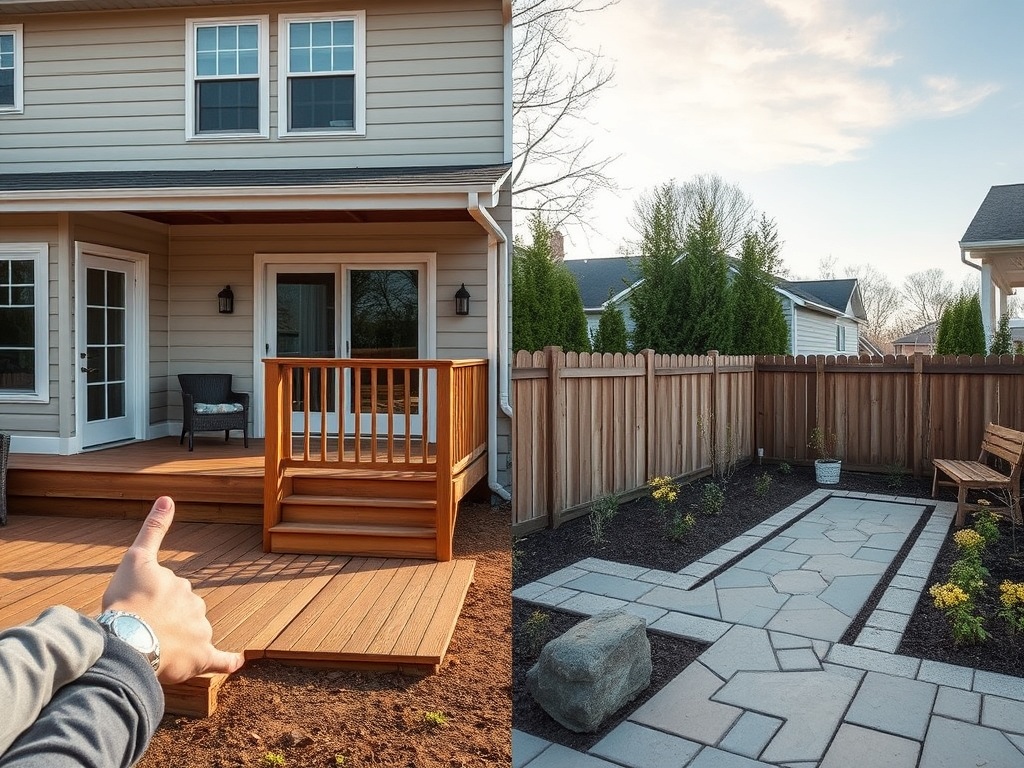
TL;DR: A deck is often the better fit when the outdoor living area must sit above grade, connect cleanly to an elevated door, or handle a sloped site. A patio often makes more sense for a ground-level space where lower structural complexity and hardscape durability matter. Everyday value depends on how the space will actually be used, maintained, and integrated with the property.
Choosing between a deck and a patio is less about which option is universally “better” and more about which one solves the site and lifestyle problem with fewer compromises. Elevation, drainage, access, maintenance tolerance, local codes, budget, and the desired feel of the space all shape the decision.
Start With the Site Before Comparing Materials
A deck is a framed structure, usually built from wood, composite decking, or another approved system. It can bridge uneven ground and create a level platform where the yard slopes away from the house. A patio is generally a ground-supported surface made from concrete, pavers, brick, stone, or similar materials.
That difference affects almost every later choice. If the back door is several feet above grade, a deck may provide the most direct transition. If the door opens nearly at ground level onto a broad, stable yard, a patio may avoid the structural framing, stairs, and guard requirements that an elevated deck can introduce.
Compare Everyday Use Not Just Installation Day
Think about the furniture, cooking, shade, foot traffic, pets, children, and seasonal use the space must support. A deck can feel like an extension of the interior floor and can create useful elevation or views. A patio can feel more connected to the garden and can support heavy furniture, planters, and fire features when designed for them.
Neither outcome is automatic. A poorly planned deck can feel exposed, while a cramped patio can feel disconnected from the house. The article on choosing the right hose length and material can even matter to everyday use if the outdoor space also needs easy access to watering and cleanup.
Deck and Patio Trade-Offs at a Glance
| Decision Factor | Deck | Patio |
|---|---|---|
| Sloped or elevated site | Often adaptable with framing and posts | May require grading, retaining work, or steps |
| Ground-level connection | Can work, but may add unnecessary structure | Often a natural fit |
| Structural code considerations | Usually significant, especially when elevated or attached | Still subject to local rules, but typically less structural framing |
| Surface feel | Wood or composite feel underfoot | Masonry, concrete, stone, or paver feel |
| Routine maintenance | Depends heavily on decking and framing materials | Depends on paving type, joints, drainage, and climate |
| Future access below surface | Framed cavity can allow some access | Buried utilities or repairs can require lifting or cutting surface |
| Visual relationship to landscape | Often feels more architectural | Often feels more integrated with grade and planting |
This comparison describes common patterns, not guarantees. Local soil, frost, rainfall, wildfire risk, termite exposure, building codes, and product specifications can change the trade-offs.
Understand Why Deck Structure Deserves Extra Attention
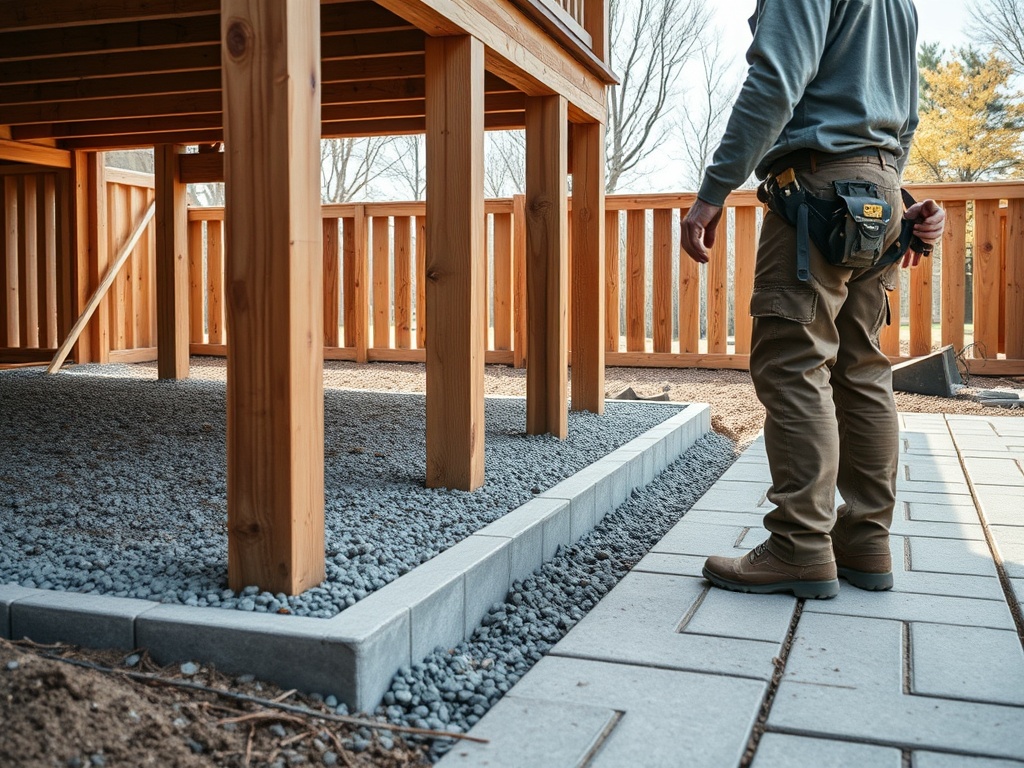
Decks are not simply outdoor floors. Posts, beams, joists, ledgers, fasteners, footings, guards, and stairs can all be safety-critical. The American Wood Council’s deck resources show the level of structural detail involved in residential deck construction and reference prescriptive guidance tied to building codes.
For homeowners, the practical takeaway is not to memorize span tables. It is to recognize when a project requires permits, engineered details, or a qualified contractor. Attachment to the house, footing depth, guard height, stair geometry, corrosion-resistant connectors, and local snow or wind loads may all be regulated.
Patios Have Their Own Technical Risks
Patios avoid elevated framing, but they still depend on proper site preparation. Drainage, base compaction, frost movement, expansive soils, tree roots, edge restraint, and surface slope can determine whether a hardscape stays usable.
Interlocking paver patios also require joint and surface maintenance. The concrete masonry & hardscapes association provides paver-maintenance guidance that illustrates why “low maintenance” should not be mistaken for “no maintenance.” Concrete slabs can crack, natural stone can stain or shift, and pavers may need joint material refreshed depending on the installation.
Compare Maintenance in Terms of Tasks
Deck upkeep may include cleaning, checking connections, addressing damage, and refinishing as the materials require. Composite surfaces can reduce some refinishing, but they still need cleaning and structural inspection. Patio upkeep may include sweeping, stain removal, joint weeds, settled pavers, cracks, and drainage. Choose the task list you are more willing to maintain over time.
Think About Heat Shade and Comfort
Dark composite decking, concrete, and some stone can become hot in strong sun. Surface temperature depends on color, material, exposure, and climate. Shade structures, umbrellas, trees, and orientation can matter as much as the base material.
Consider Water and Drainage Early
Decks allow rainfall to pass through gaps, but water must still drain away from the foundation and footings. Patios need positive surface drainage so water does not run toward the house or pond where freeze-thaw cycles or slippery algae can become issues.
If the landscape already struggles with slow-draining soil, review how to fix clay soil without overworking it before treating hardscape installation as a drainage cure. Large impervious or semi-impervious areas can change where runoff travels.
Compare Cost as a Range of Scope Not a Single Number
National cost averages can mislead because labor, access, excavation, materials, permits, drainage, demolition, and regional pricing vary widely. A ground-level patio may cost less than a raised deck in one market and more in another. Compare complete local scopes instead, including site preparation, footings or base work, drainage, finishes, railings, stairs, disposal, permits, and restoration.
A Quick Decision Framework
Choose a deck when elevation is the central problem, the house has a raised exit, views matter, or a framed structure is the cleanest way to create level outdoor space.
Choose a patio when the space is near grade, the household prefers masonry or stone underfoot, heavy ground-supported features are planned, or a closer relationship with planting beds is desired.
Get professional design or structural input when the site has steep slopes, retaining needs, poor soil, significant drainage concerns, elevated loads, rooftop conditions, or complex connections to the house.
Where Everyday Value Really Comes From
Everyday value comes from frequency of use. A modest patio placed where people naturally step outside may deliver more practical benefit than a large deck reached through an inconvenient route. A well-designed deck can be the better choice when it solves elevation and circulation that a patio cannot.
Before choosing, sketch furniture at realistic dimensions, trace walking paths from the house, identify shade through the day, and note where water moves during rain. The option that fits those realities with manageable maintenance is usually the stronger long-term decision.
Home and garden information is for educational purposes only and does not constitute structural, engineering, code, or legal advice. Permit requirements, setbacks, guards, footings, drainage rules, and construction standards vary by jurisdiction; consult local authorities and qualified professionals before building.