
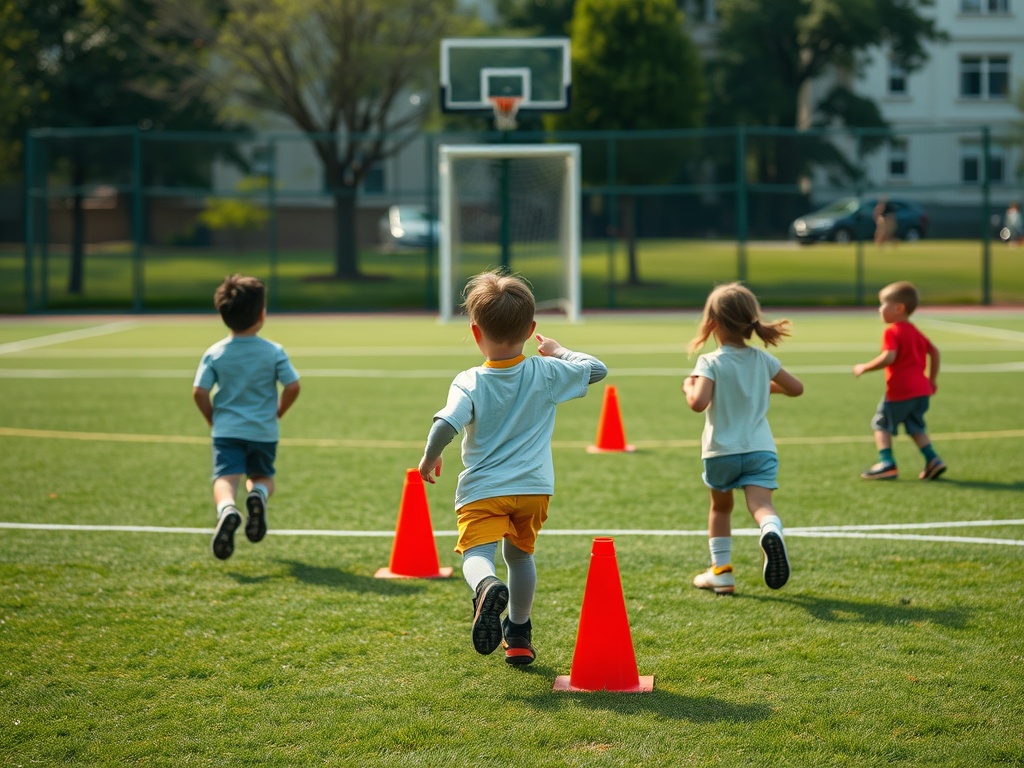
Multi-sport participation can support long-term athletic development by giving young athletes broader movement skills, varied decision-making, and a healthier relationship with competition.
TL;DR: Playing more than one sport can build adaptable athletes rather than one-pattern performers.
- The benefit depends on scheduling balance, coaching quality, and the child’s enjoyment.
- Early specialization may be appropriate in some contexts, but it should be weighed against overuse, burnout, and family strain.
The parent decision behind the question
Families often ask whether a child should focus on one sport to avoid falling behind. The pressure can feel real, especially when travel teams, showcases, and private training promise a competitive edge. Multi-sport participation offers a different path: develop the whole athlete first, then narrow later if the athlete’s interest, body, and goals support it. For deeper context, see American academy of pediatrics sports specialization report.
This is not an argument against commitment. It is an argument for age-appropriate commitment. A young athlete can train seriously while still sampling different movement patterns and team environments. For deeper context, see how to recover faster between games, practices, and tournaments.
Movement variety builds a wider base
Different sports ask the body to solve different problems. Soccer develops continuous movement, spacing, and foot-eye coordination. Basketball adds jumping, landing, contact balance, and quick transitions. Baseball and softball involve rotational power, anticipation, and fine motor timing. Football can develop acceleration, deceleration, and role-specific contact preparation when coached safely.
A wider movement base may help athletes adapt when they later specialize. It also reduces the chance that every training hour stresses the same tissues in the same way. The American Academy of Pediatrics has warned about concerns tied to intensive training and sports specialization in young athletes, including overuse and burnout. For deeper context, see how to make in-game adjustments without overcoaching.
Decision-making across different games
Athletic development is not only physical. A child who plays multiple sports learns new cues, teammates, spaces, and scoring systems. They may become better at reading opponents because the brain has seen more patterns. A soccer midfielder who plays basketball may understand spacing differently. A baseball player who plays football may learn anticipation and courage in a new setting.
Coaches often value athletes who can transfer concepts. The exact transfer is not automatic, but varied play gives the athlete more material to work with.
Development stages for families
| Stage | Main goal | Adult focus |
|---|---|---|
| Early childhood | Enjoy movement and basic skills | Keep play broad and low pressure |
| Pre-teen years | Explore roles and competition | Watch workload and confidence |
| Early teen years | Add structure and strength basics | Coordinate seasons and recovery |
| Older teens | Clarify goals and opportunities | Choose focus with athlete input |

When specialization pressure becomes unhealthy
Warning signs include chronic pain, dread before practice, loss of sleep, constant comparison with rankings, and a schedule that leaves no time for school, family, or free play. None of these automatically mean the sport must stop, but they mean adults should reassess the load. The child’s voice matters. An athlete who loves one sport deeply may choose focus, but that choice should not be driven only by adult fear.
Recovery planning is part of the same conversation. A child moving between seasons needs time to restore, not just switch uniforms.
How coaches can support multi-sport athletes
Coaches can coordinate calendars, respect other seasons, and avoid punishing athletes for missing optional workouts during another sport’s championship period. They can also teach transferable principles: balance, scanning, acceleration, deceleration, communication, and emotional control.
The overcoaching guide connects here because adaptable athletes still need clear instruction. Multi-sport experience helps, but athletes should not be expected to solve every new demand without teaching.
A family framework for choosing seasons
List the child’s interests, the physical load of each sport, the travel burden, the cost, and the recovery window. Then choose a year that has peaks and breaks. Avoid stacking every elite option at once. If the athlete becomes more serious later, the family can revisit goals with better information.
Long-term development is a marathon of good decisions. The best schedule is the one that keeps the athlete learning, healthy, and eager to return.
How to talk with a child about sport choices
Ask what the athlete enjoys, what feels stressful, and what they want to try next. Adults often hear only the coach, ranking, or schedule. The child’s answer may reveal whether the current plan is building confidence or quietly draining it.
Use neutral language when comparing options. Instead of saying one path is serious and the other is casual, talk about fit, timing, cost, friendships, coaching, and health. That keeps the conversation grounded in development rather than fear. Revisit the plan after each season because a child’s motivation, friendships, body, and school demands can change quickly.
Keep the long view in the family calendar
Choose sports seasons that build skill, confidence, and health. A broader path can still be serious when adults manage load and listen to the athlete.