TL;DR: For most outdoor plants, early morning is the most practical summer watering window because temperatures are cooler, wind is often lighter, and leaves have time to dry. Evening can work when mornings are impossible, but the right schedule still depends on soil moisture, plant type, weather, container size, and local watering rules.
The best time to water summer plants is usually early morning, but timing is only one part of good irrigation. A plant can still be overwatered early in the morning or left drought-stressed despite a “perfect” schedule if the root zone never receives enough water.
Why Early Morning Usually Works Best
Early-day watering aligns several useful conditions. Evaporation is generally lower than during the hottest part of the afternoon, plants can take up water before peak heat, and foliage that becomes wet has daylight and airflow to dry. The university of Minnesota extension recommends early-morning watering and suggests directing water toward the base of plants when possible.
A recent Minnesota Extension heat-care guide identifies roughly 5 to 9 a.m. as an effective early-morning window during hot weather. Treat that range as practical guidance rather than a universal rule. Local sunrise, humidity, wind, irrigation restrictions, and plant needs may shift the best time.
Midday Is Not Automatically Wrong but It Is Often Inefficient
Watering at noon does not “burn” ordinary garden leaves in the simplistic way the old magnifying-glass myth suggests. The more practical concern is efficiency. Hot surfaces, dry air, and wind can increase evaporation, and overhead irrigation may lose more water before it reaches the root zone.
If a plant is severely wilted from dry soil, do not withhold needed water just because it is midday. Rescue watering can be appropriate. Apply water at the soil level, reduce runoff, and then return to a more efficient routine once the immediate stress is addressed.
Evening Watering Can Be a Useful Second Choice
Evening is often better than skipping irrigation altogether, particularly during a heat wave. The trade-off is that leaves and dense canopies may remain wet longer overnight, which can favor some foliar diseases in susceptible plants and humid climates. Drip lines or soaker hoses reduce that issue by keeping most water near the soil surface.
If evening is your only reliable time, water early enough for foliage to dry when practical, avoid repeatedly soaking leaves, and pay attention to disease-prone crops. The correct decision is contextual rather than absolute.
Check Soil Moisture Before the Clock
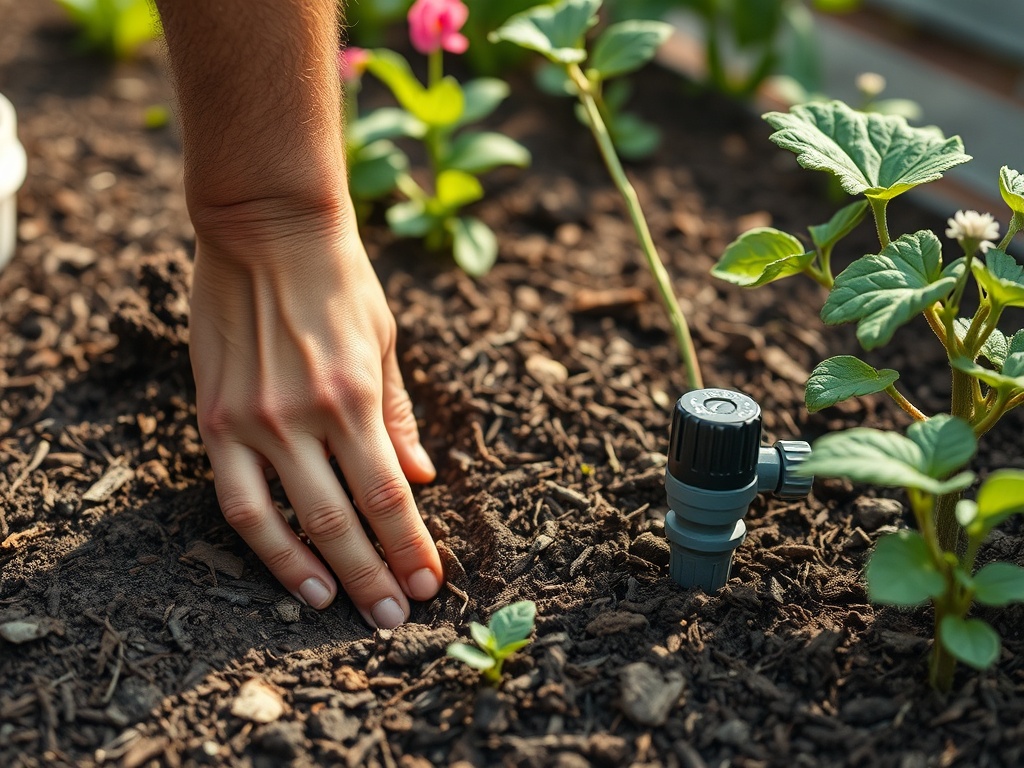
A fixed daily schedule can waste water in clay soil and still leave sandy soil dry. Push a finger, trowel, or soil probe into the root zone and check moisture below the surface. The surface can look dry while deeper soil still holds adequate water.
Containers deserve separate attention because they have limited soil volume and can dry quickly in sun and wind. Small pots, hanging baskets, and dark containers may need checks more often than in-ground beds. Large established shrubs may need less frequent but deeper watering once roots are developed.
Match the Delivery Method to the Planting
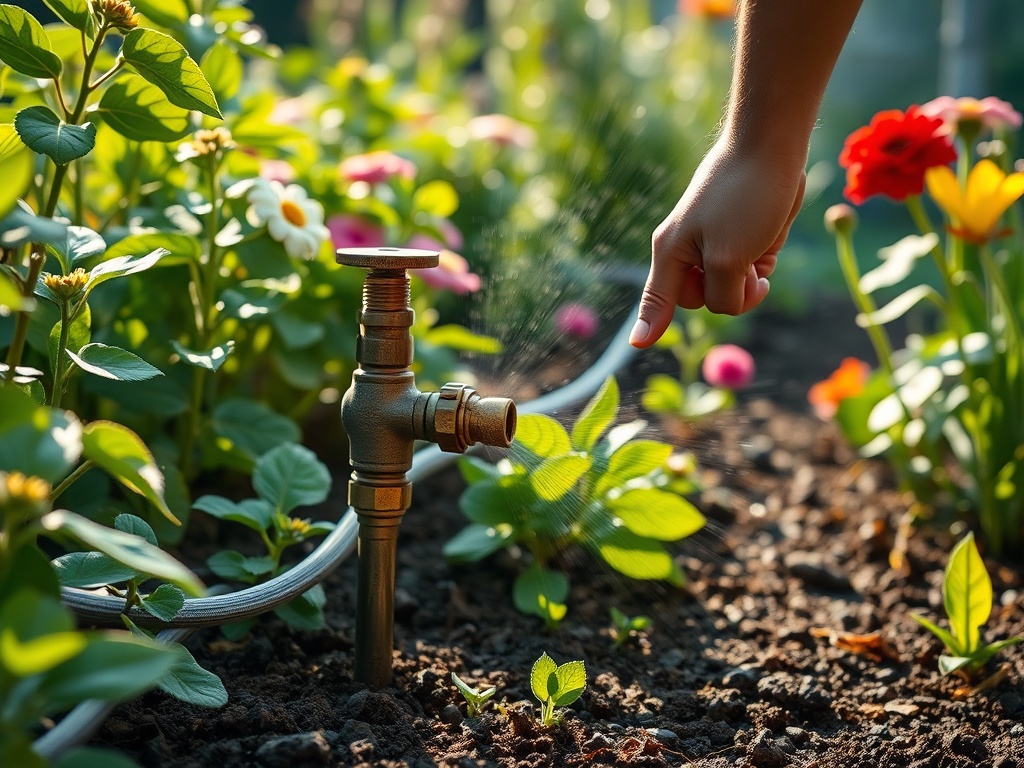
Drip irrigation and soaker hoses place water close to roots and can reduce overspray. Hand watering is flexible but depends on patience; a quick pass with a nozzle often wets only the surface. Sprinklers can be effective for lawns and broad beds but should be adjusted to limit watering of pavement and runoff.
The EPA watersense outdoor guidance emphasizes matching irrigation to landscape needs and avoiding waste. Targeted watering can also reduce moisture in open areas where weeds compete; weed prevention strategies that reduce weekend chores explains how irrigation placement fits into a broader prevention plan.
Water Deeply Enough to Reach the Active Root Zone
“Deep watering” should not be interpreted as applying a fixed number of minutes to every garden. Instead, run irrigation long enough to moisten the root zone without causing puddling or runoff. Then allow the soil to approach the moisture level appropriate for that plant before watering again.
A screwdriver or soil probe can help you check how far water penetrated. In a newly planted bed, roots occupy a smaller volume and may require more frequent checks. Established plants often tolerate longer intervals if soil stores moisture well.
Adjust for Heat Waves Wind and New Plantings
High temperatures are only one stress factor. Wind can drive rapid water loss from leaves and containers. Newly transplanted plants have limited root systems and may need closer monitoring. Mulch can reduce evaporation from bare soil, although it should be kept away from stems and trunks.
For clay-heavy sites, avoid assuming that extra surface water will solve wilting. Poor drainage can limit root oxygen and produce symptoms that resemble drought stress. If water sits for long periods, review how to fix clay soil without overworking it rather than increasing irrigation automatically.
A Simple Summer Decision Sequence
First, check the root-zone moisture. Second, look at the plant and recent weather. Third, choose the most efficient delivery method available. Fourth, water early in the day when possible. Fifth, verify that the water actually penetrated instead of running off. Finally, adjust the next irrigation based on what you observed rather than repeating the same duration by habit.
This sequence is more reliable than a universal “water every morning” rule because it accounts for soil, plant age, container size, rain, and microclimate.
Common Summer Watering Mistakes
Light daily sprinkling without checking depth: this can encourage shallow moisture patterns and may not reach deeper roots.
Watering pavement and foliage instead of soil: reposition sprinklers, repair leaks, or use a more targeted method.
Ignoring rainfall: even automated systems should respond to meaningful rain and soil moisture. Weather- or soil-moisture-based controllers can help where installed correctly.
Treating all plants alike: drought-tolerant perennials, vegetables, lawns, containers, and newly planted shrubs have different moisture needs.
Assuming wilt always means dry soil: root damage, heat stress, disease, and waterlogged soil can also cause drooping.
Make Timing Serve the Plant Not the Schedule
Early morning is a strong default because it tends to reduce avoidable losses and gives foliage time to dry. But the most effective summer watering routine combines that timing with soil checks, correct placement, sufficient depth, and flexible adjustments for weather.
If a rigid schedule is making gardening harder, shift the question from “What time do I water?” to “Does this root zone need water, and what is the least wasteful way to deliver it?” That change usually leads to better decisions through changing summer conditions.
Home and garden information is for educational purposes only. Local drought restrictions, irrigation ordinances, plant requirements, and climate conditions can override general timing guidance; follow local rules and horticultural recommendations where applicable.