
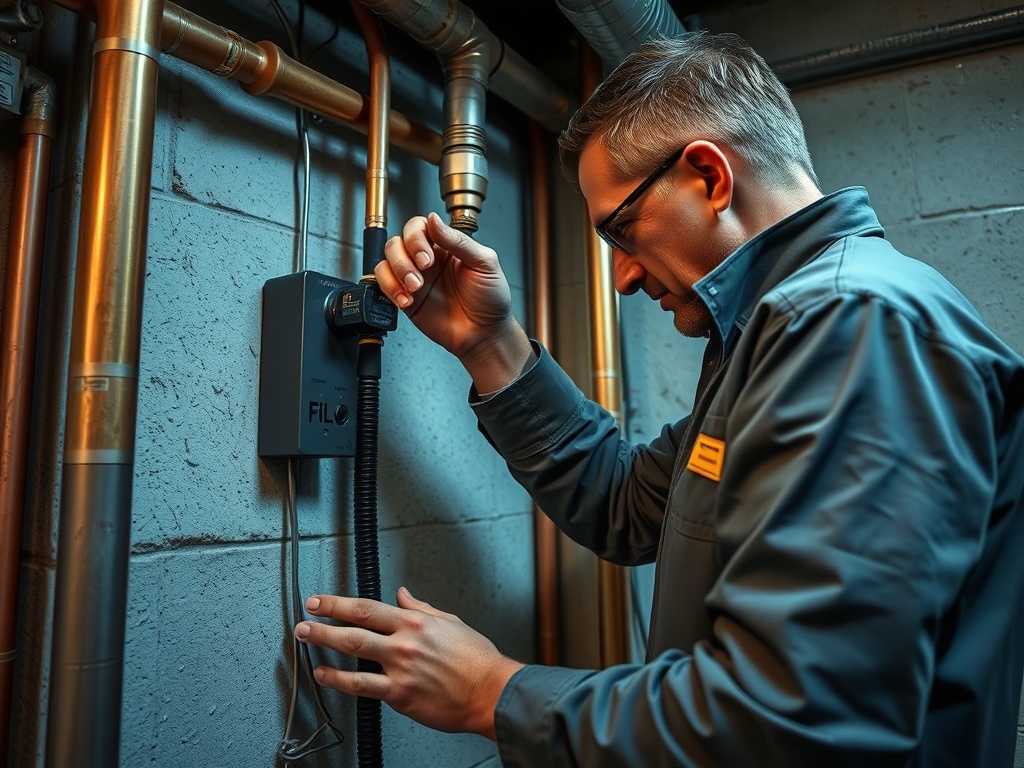
Smart sensors can help facility teams detect leaks earlier, understand occupancy patterns, and monitor asset conditions, but they only create value when alerts lead to clear maintenance actions. The real decision is not simply which sensor to buy; it is what problem the data will help the team solve.
Sensor decision snapshot
- Start with a use case, a response owner, and an action threshold.
- Pilot sensors in a limited area before scaling across a portfolio.
- Plan cybersecurity, battery replacement, calibration, and data ownership early.
- Connect alerts to work orders so findings do not stay trapped in dashboards.
What smart sensors can and cannot solve
A sensor can report a condition. It cannot, by itself, decide the maintenance priority, repair method, tenant communication, or capital plan. That distinction matters because many sensor programs fail from unclear ownership rather than poor hardware. A leak sensor under a critical riser is useful only if someone receives the alert, has access, knows the shutoff location, and can create a documented response.
The strongest programs begin with painful, measurable problems: unnoticed water leaks, rooms that are heated and cooled when empty, equipment that fails without warning, or assets that are inspected too often in low-risk conditions. NIST's Cybersecurity for IoT Program is a good reminder that connected devices also add security and management responsibilities, especially when they touch building systems or tenant spaces.
Practical use cases in buildings
Leak detection is often the easiest use case to justify because water damage can spread quickly and may affect tenants, finishes, elevators, electrical rooms, or archives. Sensors can be placed near mechanical equipment, restrooms, roof drains, sump areas, domestic water risers, and known trouble spots. They do not replace inspections; they add a layer of awareness between inspections.
Occupancy sensors are different. They may support cleaning schedules, ventilation strategies, space planning, or after-hours control, but they can raise privacy and governance questions. The team should define what is being measured, who can see the data, and whether the data identifies people or only patterns. Asset monitoring, such as vibration, temperature, current, pressure, or runtime, belongs closer to maintenance strategy and can support industrial shutdown planning when temporary outages depend on reliable asset condition.
| Use case | Useful sensor data | Action the team must define |
|---|---|---|
| Leak detection | Presence of water, humidity change, sump level | Who responds, how fast, and where shutoffs are located |
| Occupancy | Presence, count estimate, utilization pattern | How data affects cleaning, HVAC, or space planning |
| Asset monitoring | Vibration, temperature, current draw, runtime | When to inspect, adjust, repair, or replace |
| Indoor conditions | Temperature, humidity, CO2, pressure | Which readings trigger comfort, ventilation, or envelope review |
| Access and security | Door status, equipment-room entry, alarms | How alerts are investigated and documented |

Data quality and cybersecurity decide the outcome
False alarms cause teams to ignore alerts. Missing alarms create false confidence. Before scaling, teams should test sensor placement, signal strength, battery life, environmental tolerance, and maintenance access. They should also confirm whether devices can be named consistently, updated securely, and removed from service without leaving orphaned accounts or unknown network connections.
The NISTIR 8259A IoT cybersecurity baseline describes device capabilities that organizations can consider when acquiring connected products. For a facilities team, the practical translation is simple: know the device identity, update method, access control, data protection approach, and security-event visibility before installing devices across a building.
How to turn sensor alerts into maintenance work
A smart sensor pilot should end with operating rules, not just a dashboard screenshot. For each alert, define the severity, response time, responsible role, documentation method, and closeout code. Where possible, alerts should create or enrich work orders in the maintenance system. Otherwise, teams may end up with parallel systems: one shows alarms, another holds labor history, and neither tells the full story.
Sensor planning also affects contractor roles. If outsourced teams respond to alarms, the contract should define after-hours access, documentation, data rights, escalation, and response expectations. That connects directly to contractor management policies for maintenance tasks, because sensor data is only useful when responsibilities are written down.
Implementation checklist for a sensor pilot
1. Choose one problem and one building area before buying at scale.
2. Define what the sensor will measure and what decision it will support.
3. Test placement, signal, battery life, durability, and nuisance alarms.
4. Document who receives alerts and who creates the work order.
5. Review cybersecurity, data ownership, privacy, and vendor support.
6. Compare pilot findings with inspection records and repair history.
7. Scale only after response procedures are clear.
Budget for ownership, not only devices
Sensor budgets should include gateways, installation labor, commissioning, labels, batteries, replacement devices, platform subscriptions, cybersecurity review, staff training, and integration time. A low-cost sensor can become expensive if it creates nuisance alarms or needs frequent truck rolls. A more expensive device may be justified only when the monitored space or asset has enough consequence.
Owners should also decide what happens when a vendor relationship ends. Data export, device removal, account closure, and replacement compatibility should be discussed before the pilot scales.
How to judge a successful pilot
A pilot should be judged by decisions improved, not by the number of devices installed. Did the leak sensor prevent damage? Did occupancy data change cleaning or HVAC scheduling? Did asset monitoring find a condition early enough to avoid emergency work? If the answer is unclear, the pilot may need better success criteria before expanding.
That review should include the people who receive alerts at night, because after-hours response often exposes weak ownership faster than a daytime demonstration.
Plan maintenance for the sensor network
Sensors become assets the moment they are installed. They need names, locations, owners, batteries, firmware tracking, calibration expectations, replacement rules, and removal procedures. If a device is moved without updating the system, future alerts may point responders to the wrong room. If a battery dies silently, the team may believe a space is protected when it is not.
A sensor inventory should be reviewed with the same discipline as valves, panels, pumps, or access-control devices. This keeps the monitoring layer from becoming another source of deferred maintenance.
Maintenance staff should be able to see sensor health at a glance. A quiet dashboard should mean normal conditions, not dead devices, missing gateways, or disabled notifications.
This check should be part of routine rounds.
Turn Sensor Data Into Maintenance Decisions
The best sensor programs are modest at first and disciplined as they grow. Start where missed information creates real risk, connect alerts to action, and build a maintenance record that improves future decisions. This is educational guidance only; cybersecurity, privacy, code, and engineering requirements should be reviewed for the specific site and jurisdiction.