
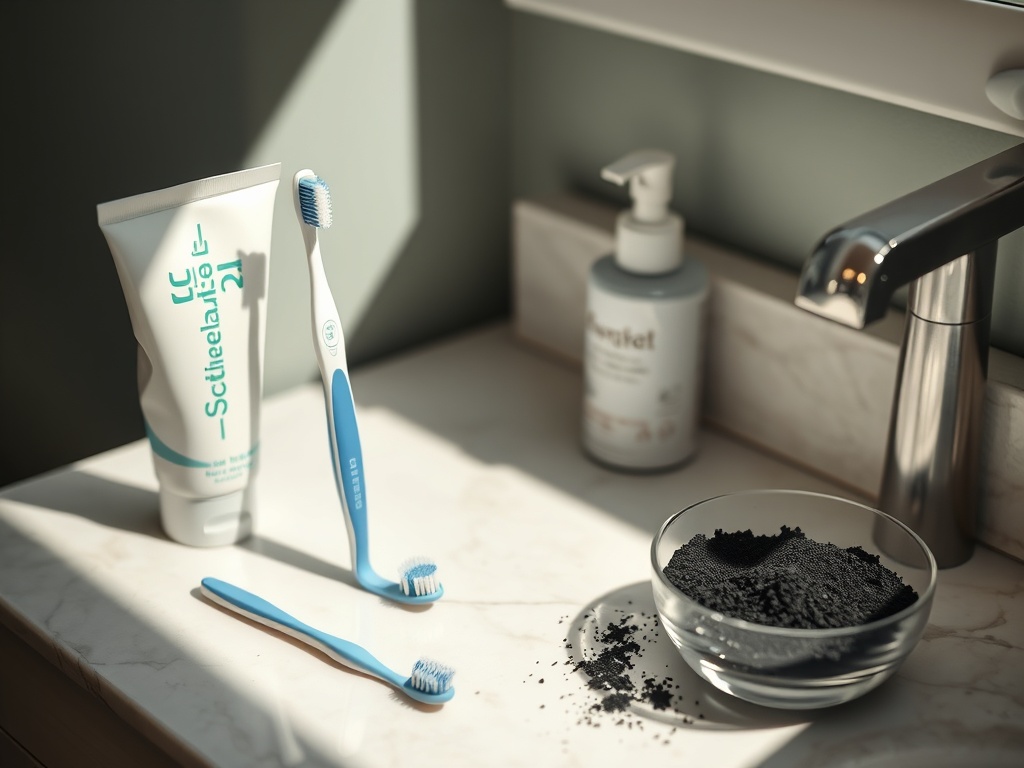
Charcoal Toothpaste, Oil Pulling, and Other Oral Care Myths
Popular oral care trends can sound harmless, but the best home routine is usually much simpler than social media makes it seem. Many myths persist because they offer a quick fix, while evidence-based care asks for consistency instead.
TL;DR
- Charcoal toothpaste may look dramatic, but abrasive products can wear surfaces and are not a proven shortcut to healthier teeth.
- Oil pulling is not a replacement for brushing with fluoride toothpaste and cleaning between teeth daily.
- A trend is most risky when it delays care for decay, gum disease, cracks, or infection that need a dentist’s attention.
Why myths spread so easily
Oral care myths usually survive for three reasons: they sound natural, they produce a temporary visible effect, or they promise control without a dental visit. For example, a harsh product may strip some surface stain and feel effective right away, even if it also roughens the tooth surface or irritates soft tissue. A home remedy may freshen the mouth for a while, even though it does not treat the underlying problem.
The safer question is not ‘does this trend exist?’ but ‘what problem is it supposed to solve, and what does reliable evidence support instead?’
Myth vs fact for Charcoal Toothpaste, Oil Pulling, and Other Oral Care Myths
| Myth | Why people try it | What the evidence supports | What can go wrong |
|---|---|---|---|
| Charcoal toothpaste detoxes teeth | Dark powder feels powerful and stain-lifting | Daily plaque control with fluoride toothpaste is the standard foundation of home care | Abrasive formulas may increase wear, especially on exposed roots or already-thin enamel |
| Oil pulling replaces mouthwash or brushing | It feels natural and traditional | Brushing twice daily with fluoride toothpaste and cleaning between teeth remain the main evidence-based habits | Delaying proven care can leave plaque, cavities, or gum inflammation untreated |
| If gums bleed, stop flossing there | Bleeding feels like damage | Bleeding more often signals inflammation from plaque and usually means the area needs gentle, regular cleaning | Avoiding the spot can allow gingivitis to progress |
| Whiter means healthier | Brightness is easy to see | Tooth shade and tooth health are not the same thing | People may ignore decay, sensitivity, cracks, or leaking dental work while chasing color |
Charcoal toothpaste: where the promise outruns the proof
The appeal of charcoal toothpaste is easy to understand. The black color suggests deep cleaning, and some formulas can remove certain surface stains simply because they are abrasive. The problem is that teeth do not benefit from unnecessary abrasion. The ADA notes that whitening approaches work in different ways, and not all products improve tooth color by the same mechanism. NIDCR’s basic oral hygiene guidance still centers on fluoride toothpaste, not charcoal, as the daily standard.
For people with recession, dentin exposure, sensitivity, veneers, bonding, or lots of old dental work, ‘aggressive’ products can be especially disappointing. They may not change the color of restorations, and they may make the mouth feel rougher or more sensitive. If your goal is stain removal, a dentist can help you sort out whether the issue is surface stain, deeper discoloration, dehydration, or aging restorations.
Oil pulling: not dangerous for everyone, but not a substitute
Oil pulling is often discussed as though it can detox the mouth. That language is misleading. Swishing oil may leave the mouth feeling coated or fresher for a short time, but it does not replace fluoride, mechanical plaque removal, or professional diagnosis. If someone enjoys it as an extra ritual and it does not irritate the mouth, the bigger issue is what gets skipped because of it.
The real downside shows up when a person says they stopped using fluoride toothpaste, stopped cleaning between the teeth, or kept trying home remedies while bleeding gums, decay, or a gum boil got worse. Home rituals are low-stakes until they replace care that actually changes disease risk.
Other common myths patients hear
- ‘Harder brushing cleans better.’ In reality, technique matters more than force, and overbrushing can irritate gums and wear exposed root surfaces.
- ‘Mouthwash can replace flossing or interdental cleaning.’ It can support freshness, but it does not physically remove plaque from tight contacts the way interdental tools do.
- ‘If nothing hurts, nothing is wrong.’ Early decay, gum disease, cracks, and failing dental work are often painless at first.
- ‘DIY whitening works the same for everyone.’ Natural teeth, fillings, crowns, and intrinsic discoloration do not respond the same way.
What evidence-based home care still looks like
- Brush twice a day with a fluoride toothpaste and a soft-bristled brush.
- Clean between your teeth every day using floss, a water flosser, or interdental brushes as recommended for your spacing and dental work.
- Limit frequent sugar exposure and address dry mouth if it is making plaque control harder.
- Use whitening, sensitivity, or gum-care products based on the actual problem rather than online hype.
If you are unsure which tools make sense for your mouth, a professional exam is often more useful than trying five products at random. Our article on What a Comprehensive Oral Exam Includes Beyond the Cleaning explains how dentists decide what you actually need.
Routine issue or time to book soon?
A routine appointment is usually enough if you are mostly trying to choose products or understand mild sensitivity, stain, or bleeding. Book promptly if your gums bleed in one spot again and again, floss catches on a restoration, or a tooth has become rough, dark, or temperature-sensitive. Seek urgent care if you have swelling, pus, fever, or severe pain. A trend cannot fix an abscess.
If you have been trying to brighten your smile, it also helps to read Repair vs Replace: When Old Dental Work Can Be Fixed and Professional Teeth Whitening: Who Gets the Best Results?, because not every color change is a whitening problem.
Key Takeaways for Charcoal Toothpaste Oil Pulling Other Oral Care Myths
For Charcoal Toothpaste Oil Pulling Other Oral Care Myths, this part of Key Takeaways for Charcoal Toothpaste Oil Pulling Other Oral Care focuses on the diagnosis, patient goal, treatment limits, and maintenance burden while risks and alternatives are compared, with the same details verified while recovery expectations are clarified.
Treat any product that causes burning, peeling, persistent sensitivity, or gum irritation as a reason to stop and ask a dentist which safer alternative fits your mouth.
Look for whether the advice preserves core habits or quietly replaces them. If the trend tells you to stop fluoride toothpaste, stop brushing normally, or ignore symptoms, that is a strong warning sign.
Check whether the claim depends on dramatic before-and-after photos rather than on routine daily use and realistic outcomes.
Ask what specific problem the product is supposed to solve: plaque control, stain removal, sensitivity, or gum inflammation.
How to pressure-test an oral care claim
Next Steps for Charcoal Toothpaste Oil Pulling Other Oral Care Myths
A practical plan for Charcoal Toothpaste, Oil Pulling, and Other Oral Care Myths should identify the first action, reasonable alternatives, expected maintenance, and the consequence of waiting. Before leaving a visit about Charcoal Toothpaste, Oil Pulling, and Other Oral Care Myths, confirm the follow-up date and the symptoms that should prompt earlier contact as the treatment sequence is documented. The next step for Charcoal Toothpaste, Oil Pulling, and Other Oral Care Myths is an examination matched to the current urgency and a concise record of what has changed.
Clinical Checks for Charcoal Toothpaste Oil Pulling Other Oral Care Myths
For Charcoal Toothpaste Oil Pulling Other Oral Care Myths, this part of Clinical Checks for Charcoal Toothpaste Oil Pulling Other Oral Care focuses on confirmed findings, measurements, imaging, and health-history factors when home-care instructions are prepared, with the same details verified while recovery expectations are clarified. The clinician should also explain what remains uncertain and whether another test or specialist opinion would alter the plan for Charcoal Toothpaste Oil Pulling Other Oral Care Myths when maintenance is discussed, using the examination and health history rather than a general assumption.
Questions About Charcoal Toothpaste Oil Pulling Other Oral Care Myths
For Charcoal Toothpaste Oil Pulling Other Oral Care Myths, this part of Questions About Charcoal Toothpaste Oil Pulling Other Oral Care Myths focuses on the symptom history, previous treatment, current medicines, and the result the patient values most as the treatment sequence is documented, with the same details verified while recovery expectations are clarified.
Supporting sources: NIDCR oral hygiene basics | ADA whitening overview | ADA on dental X-rays