

Bleisure trips become expensive or stressful when the business and leisure portions are never clearly separated. The best approach is to define which dates, costs, travelers, and hotel requirements belong to work, then plan the personal extension around those fixed constraints.
TL;DR: Get employer approval first, separate business and personal expenses, check how an extended stay changes the hotel rate, verify workday logistics, protect travel documents and insurance coverage, and make a clear plan for companions who are not part of the business trip.
Mistake 1: Adding leisure days before checking company policy
The easiest way to create reimbursement problems is to extend a trip before understanding the employer's rules. Some organizations permit personal extensions but require the traveler to document the price of the business-only itinerary, pay incremental airfare or hotel costs personally, or use separate bookings.
Ask for the relevant travel and expense policy before changing dates. Confirm who approves the extension, how airfare comparisons must be documented, whether personal nights can remain on the corporate booking, and which expenses must be separated. Keep the approval and any required comparison quotes with the trip records.
Tax treatment can also differ from company reimbursement rules. For U.S. taxpayers, IRS Publication 463 explains business-travel expenses and the treatment of trips that combine business and personal activities. It is U.S.-specific guidance, not a universal rule, so travelers elsewhere should use the applicable local tax rules and employer policy.
Mistake 2: Treating the hotel as one continuous business expense
A hotel may let you keep the same room for the whole trip, but that does not mean every night should be billed the same way. Conference rates, corporate rates, taxes, resort charges, parking, breakfast, and cancellation rules may change when personal nights are added.
Ask the hotel or booking channel whether the negotiated rate applies to the extension and how the folio will be itemized. If the personal nights price differently, save the business-only confirmation and the final extended booking. A clean record prevents the later problem of trying to reconstruct which charges belonged to which purpose.
This is closely related to hotel-overpaying mistakes: the lowest-looking rate is not always the lowest total once different nights, fees, parking, and benefits are compared.
Mistake 3: Choosing a leisure-friendly hotel that makes workdays harder
A resort outside the city may be attractive for the personal portion but costly in time and transport during the business portion. The opposite can also happen: a business hotel next to the meeting venue may leave the leisure days disconnected from the experiences you wanted.
Map both halves of the trip. For workdays, check commute time at the hours you will actually travel, meeting-space access, reliable internet, workspace, breakfast timing, and transport options after evening events. For leisure days, look at access to attractions, recreation, dining, and the airport or station.
Sometimes two hotels are more practical than one. That adds a move, but it can reduce repeated transport and let each property serve a clear purpose. If you split the stay, allow enough time between checkout, luggage storage, and the next check-in.
Mistake 4: Assuming a date change will leave the flight economics unchanged
Extending the return date can change the airfare, fare class, change conditions, or corporate booking eligibility. A cheaper personal return date can also create extra hotel and meal costs that erase the airfare saving.
Before asking a travel desk or airline to change the ticket, record the business-only itinerary and price if your employer requires it. Compare the full incremental cost of the extension, not only the fare difference. If a companion is joining, keep that person's tickets and fees separate from the business record unless your employer explicitly covers them.
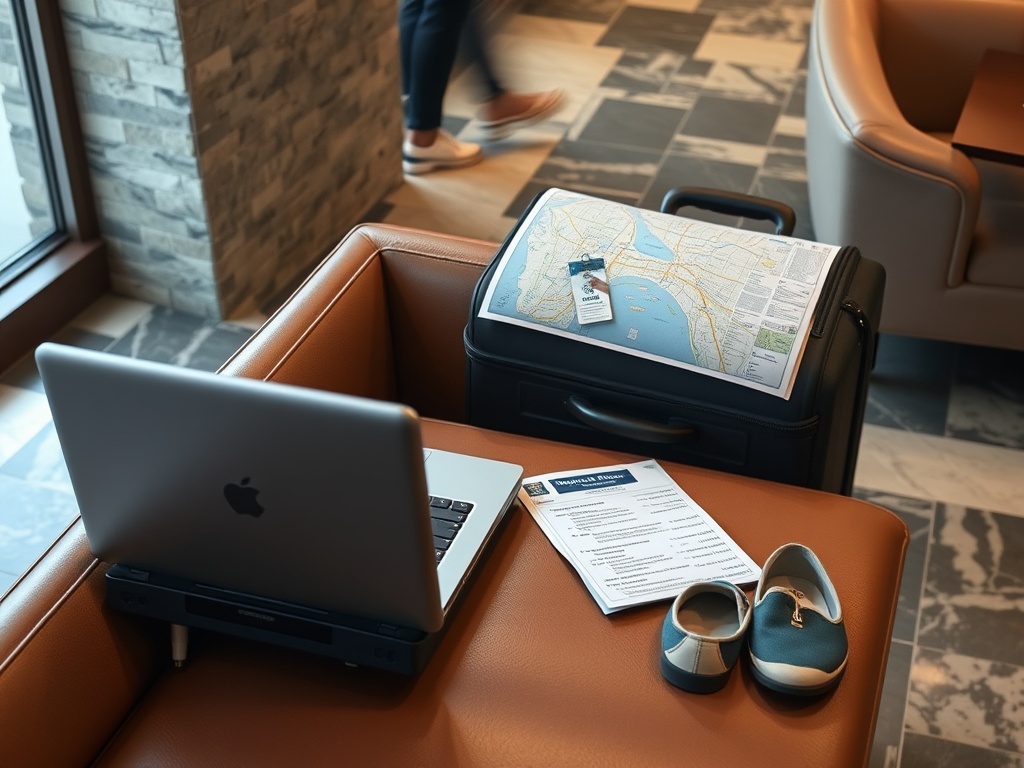
Mistake 5: Letting work spill into every leisure day
Bleisure can fail even when the accounting is perfect. A traveler may book nonrefundable activities immediately after the conference, only to discover that a client dinner moves, a meeting runs late, or a follow-up session is added.
Protect the transition. Keep the first personal activity flexible when possible, especially if it starts within hours of the last work obligation. Set an internal cutoff for email and calls if your role permits it. If you need to remain reachable, choose activities that can tolerate interruptions rather than booking a rigid all-day excursion.
For premium resorts or villas, review the common mistakes when booking high-end stays before paying for a costly leisure extension that depends on a narrow arrival window.
Mistake 6: Forgetting that the personal extension can change travel-document needs
An extension may add a border crossing, side trip, car rental, or different departure airport. Those changes can introduce visa, passport-validity, driving, insurance, or local-entry requirements that were not relevant to the original work itinerary.
For international travel, the U.S. State Department's international travel checklist advises checking destination-specific entry and exit rules and passport-validity requirements. Travelers should use the official guidance issued by their own government and the destination country when applicable.
Do this before buying the personal segment. A spontaneous side trip is less spontaneous when a document requirement makes boarding impossible.
Mistake 7: Adding a partner or family member without planning the handoff
A companion may arrive while you are in meetings, need access to the room before you can meet them, or be excluded from corporate transfers and event meals. Resorts may also charge for an additional occupant or require the primary guest to be present at check-in.
Confirm occupancy, guest-name, breakfast, lounge, transfer, and check-in rules before the companion travels. Share a practical arrival plan that does not depend on you leaving a meeting. If the leisure portion becomes a tropical resort stay, the transfer and weather issues in these tropical resort trip mistakes deserve a separate check.
A recovery plan when business changes the leisure plan
If meetings move or the business trip shortens, protect the parts with the strictest deadlines first. Check the flight change rule, then hotel cancellation terms, then prepaid activities. Contact each provider through an official channel and keep written confirmation of any change, credit, or waiver.
For expense records, do not retroactively label personal costs as business costs because the schedule changed. Keep original confirmations and updated receipts so the final report shows what actually happened. If you are unsure about reimbursement, ask the employer rather than relying on a travel forum or a colleague's past treatment.
| Planning gap | What can go wrong | Better move |
|---|---|---|
| No policy check | Reimbursement dispute | Get written approval before extending |
| One blended hotel bill | Hard-to-explain expenses | Request itemization and keep confirmations |
| Resort chosen for leisure | Long workday commute | Map work and leisure locations separately |
| Rigid first leisure day | Lost prepaid activity | Keep the transition period flexible |
Keep work and leisure clearly separated
A successful bleisure trip does not require turning the vacation into an accounting exercise. It requires a clean boundary: approved business itinerary on one side, deliberately chosen personal extension on the other. Before booking, save the business-only cost, confirm company rules, test the hotel location for both halves, and review the first personal day for flexibility. That gives you a trip that is easier to enjoy and easier to explain when the expense report is due.